
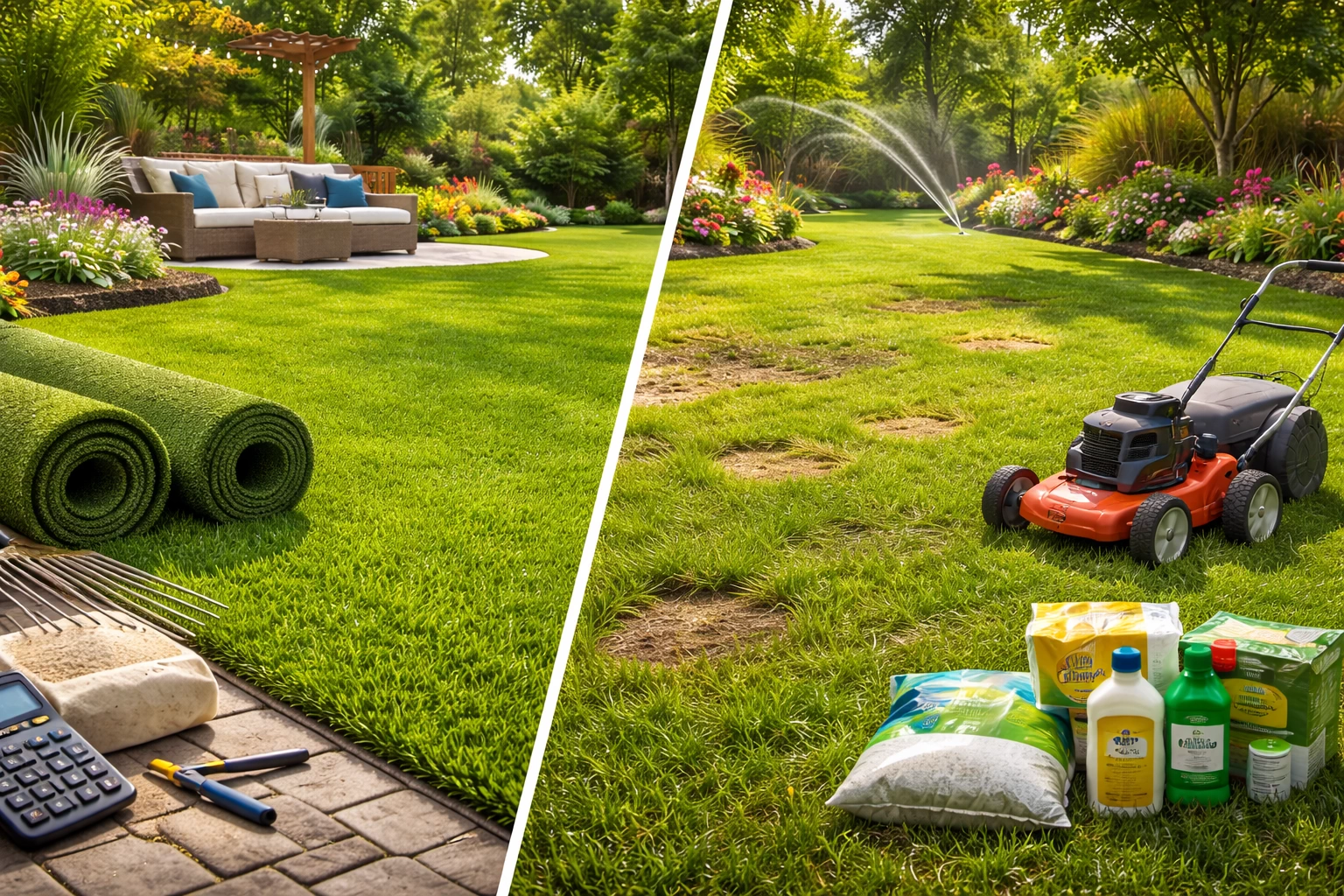
Artificial Grass vs. Natural Grass: Cost, Environmental Impact, and Durability Compared
When deciding on the best lawn option for your home or business, understanding the differences between artificial grass and natural grass is essential. Both have distinct advantages and drawbacks related to cost, environmental impact, and durability. In this article, we will compare these key factors to help you make an informed decision.
Cost Comparison
Firstly, the upfront installation cost of artificial grass is generally higher than planting natural grass. Installing synthetic turf involves site preparation, purchasing the turf material, and professional installation, which can be costly. On the other hand, natural grass often has a lower initial expense since you can seed or sod it yourself.
However, when considering the long-term expenses, artificial grass proves to be more cost-effective. Natural lawns require ongoing maintenance such as watering, mowing, fertilizing, and pest control, all of which add to your annual costs. Conversely, artificial turf has minimal maintenance needs, saving money on lawn care equipment, water bills, and landscaping services over time.
Environmental Impact
Next, environmental considerations play a significant role in choosing between artificial and natural grass. Natural grass offers benefits such as carbon dioxide absorption, oxygen production, and supporting local ecosystems. However, maintaining a natural lawn can require significant water usage, especially in dry climates, along with chemical fertilizers and pesticides that may harm the environment.
Artificial grass eliminates the need for watering and chemical treatments, thereby conserving water and reducing pollution runoff. Yet, it is made from synthetic materials that require energy to produce and eventually dispose of, potentially contributing to environmental waste. Therefore, while artificial turf reduces water consumption, natural grass supports biodiversity and air quality.
Durability and Longevity
When it comes to durability, artificial grass clearly outperforms natural grass. Synthetic turf is designed to withstand heavy foot traffic, harsh weather conditions, and wear without turning patchy or muddy. It retains its lush green appearance throughout the year, regardless of climate changes.
In contrast, natural grass is vulnerable to drought, pests, diseases, and seasonal changes, which can cause it to brown, thin out, or require reseeding. Regular maintenance is necessary to keep natural lawns healthy and attractive, especially in high-traffic areas.
Conclusion
In summary, choosing between artificial grass and natural grass depends on your priorities. Artificial grass offers a higher initial investment but delivers long-term savings, water conservation, and unmatched durability. Meanwhile, natural grass provides environmental benefits like oxygen production and ecosystem support but demands ongoing maintenance and resource consumption.
By weighing the cost, environmental impact, and durability factors, you can select the lawn option that aligns best with your lifestyle and values. Whether you prioritize sustainability, appearance, or convenience, both artificial and natural grass have unique qualities worth considering.
-
Serving South Florida
-
Monday - Friday: 9AM - 5PM